
 adminkrm
Most parents check the report card first. Marks, percentages, class rank, it’s the easiest way to measure how a child is doing at school. But ask a parent who has watched their child freeze before an exam, cry after a fallout with a friend, or give up midway through a project, and they’ll describe something a percentage never shows. This is where emotional intelligence in students starts to matter as much as academic performance. Schools are increasingly recognising that a child who scores well but struggles to manage stress or work with others isn’t fully ready for what comes after school. Emotional growth and academic growth build on each other.
Emotional Intelligence in Students: Understanding Its Importance in Education
Emotional intelligence, often shortened to EQ, is a child’s ability to recognise, understand, and manage their own emotions while noticing and responding to what others feel. IQ measures how a child thinks. EQ measures how a child feels, reacts, and connects with people around them.
The two don’t compete. A child with a strong academic record can still struggle in class if they don’t know how to calm down before a test or ask for help when confused. Self-awareness and empathy are usually the first skills teachers try to build. A child who understands their own frustration is less likely to lash out.
How Emotional Intelligence Helps Children Inside and Outside the Classroom
Picture a group project where three children disagree on how to split the work. Or a match the team loses after leading for most of the game. Or a birthday party where a child wasn’t invited but their closest friend was. These are ordinary moments, and they’re exactly where emotional skills get tested.
Children with stronger emotional intelligence communicate more clearly because they can name what they’re feeling instead of just reacting to it. They handle group work better because they can negotiate rather than insist. They recover from a bad exam or a lost match faster, having learned that failure is information, not identity. Over time, this builds real confidence, the kind that comes from knowing you can handle it when things don’t go your way.
Why Emotional Skills Are Important Along With Academic Learning
Marks show how a child performed on one day, in one subject, under one set of conditions. They don’t show how that same child will handle a difficult colleague years later, a disagreement with a friend, or a setback in something they’ve worked hard for.
Confidence, resilience, and sound decision-making under pressure aren’t things a syllabus teaches on its own. They’re built through smaller experiences, a debate that didn’t go their way, a friendship that needed repairing, a competition they didn’t place in.
How Schools Can Support Emotional Development in Children
A classroom where children feel safe asking a question they’re embarrassed about is already doing a lot of the work. Teachers who notice when a usually talkative child goes quiet, or who spend five minutes talking through a conflict instead of jumping straight to punishment, shape emotional development as much as any formal lesson.
Group projects and class debates give children low-stakes practice at cooperation and disagreement. Leadership roles, heading a class committee or captaining a team, teach responsibility. Creative outlets like art, music, and drama give children a way to express what they may not yet have words for.
Role of Parents in Developing Emotional Intelligence in Children
Home is where most of this groundwork happens. Listening without jumping straight to advice helps a child feel heard, which makes them more likely to open up next time. Asking “how did that make you feel” instead of “why did you do that” encourages reflection instead of defensiveness.
Children also need to see that mistakes are survivable. A parent who talks calmly through their own bad day, instead of hiding the frustration, models the same skills a child is trying to learn. None of this needs a formal sit-down. It happens in the car ride home, at the dinner table, before bed.
Building Future-Ready Students Through Holistic Learning
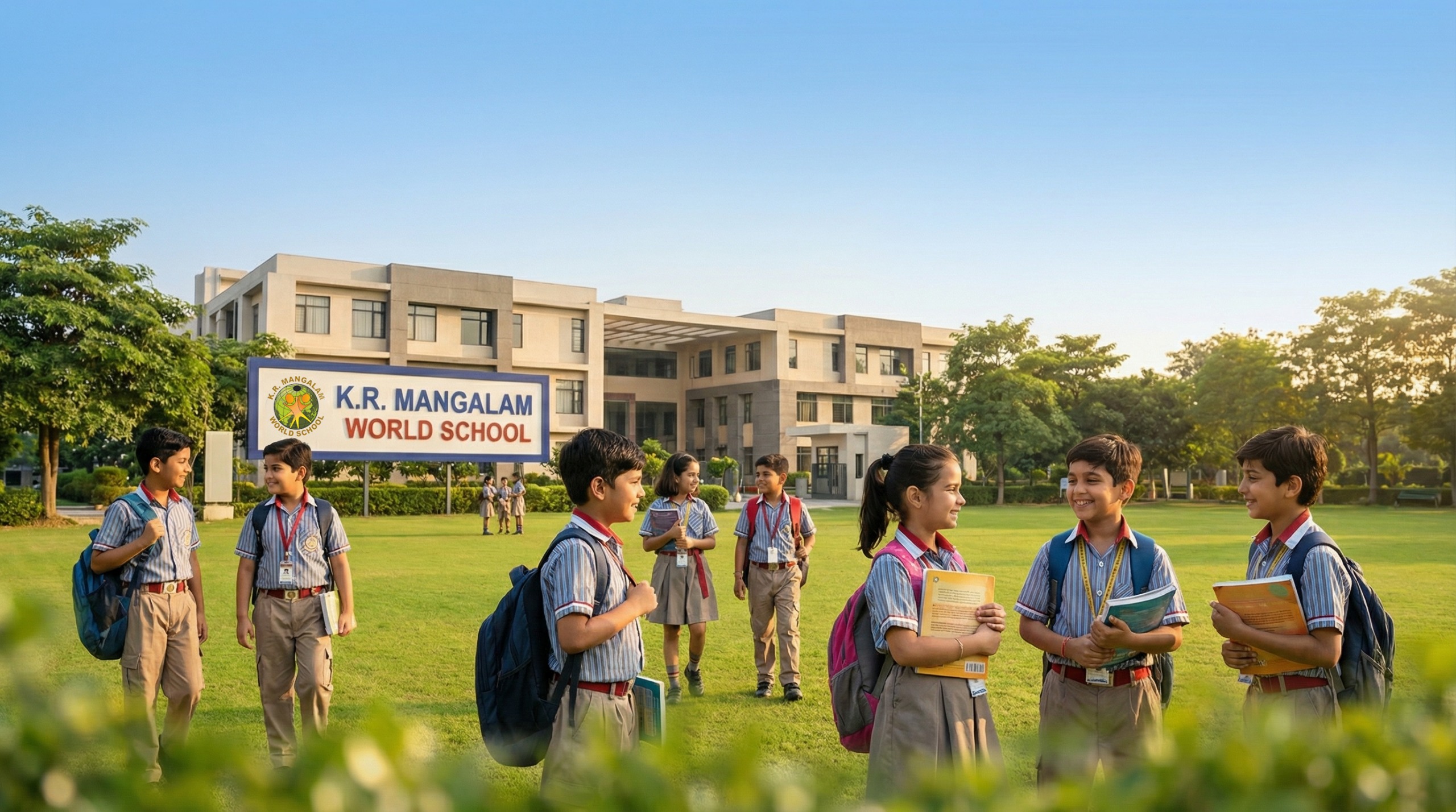
Schools that pair academics with genuine opportunities for emotional and social growth tend to produce students who adapt more easily to new situations. At K.R. Mangalam World School, Indirapuram, this shows up in the balance between classroom learning and activities such as sports, performing arts, group projects, and leadership roles, spaces where children practise many of the same skills that matter beyond the exam hall. The idea isn’t to replace academic rigour but to sit alongside it, so classroom learning is matched by what children learn about themselves and the people around them.
Frequently Asked Questions
Q1. What is emotional intelligence in students?
Emotional intelligence in students refers to their ability to recognise, understand, and manage their own emotions while being aware of and responding appropriately to the emotions of people around them. It includes self-awareness, empathy, and social skills that shape how children learn and interact.
Q2. Why is emotional intelligence important in school education?
It helps children handle stress, build friendships, work well in teams, and recover from setbacks. These skills shape how a child learns, behaves, and relates to others, making emotional development just as central to school life as academic subjects.
Q3. How can parents improve emotional intelligence in children?
Parents can help by listening without judgement, encouraging children to name what they feel, talking through mistakes calmly, and creating a home environment where emotions can be expressed openly. Small, everyday conversations often do more than any formal lesson.
Q4. Does emotional intelligence help students perform better academically?
Yes, indirectly. Children who can manage stress, stay focused despite distractions, and recover from failure tend to engage better with academic work over time. Emotional intelligence supports learning rather than replacing it, working alongside academics rather than against them.
Conclusion
Report cards will always matter to some extent, they’re one way of tracking progress. But they were never meant to be the whole picture. A child’s education feels complete when it builds capable minds alongside steady, self-aware individuals who know how to navigate people, setbacks, and pressure. For parents, that might mean asking not just how the test went, but also how it made them feel, and actually waiting for the answer.